Every year, it seems like the same conversation.
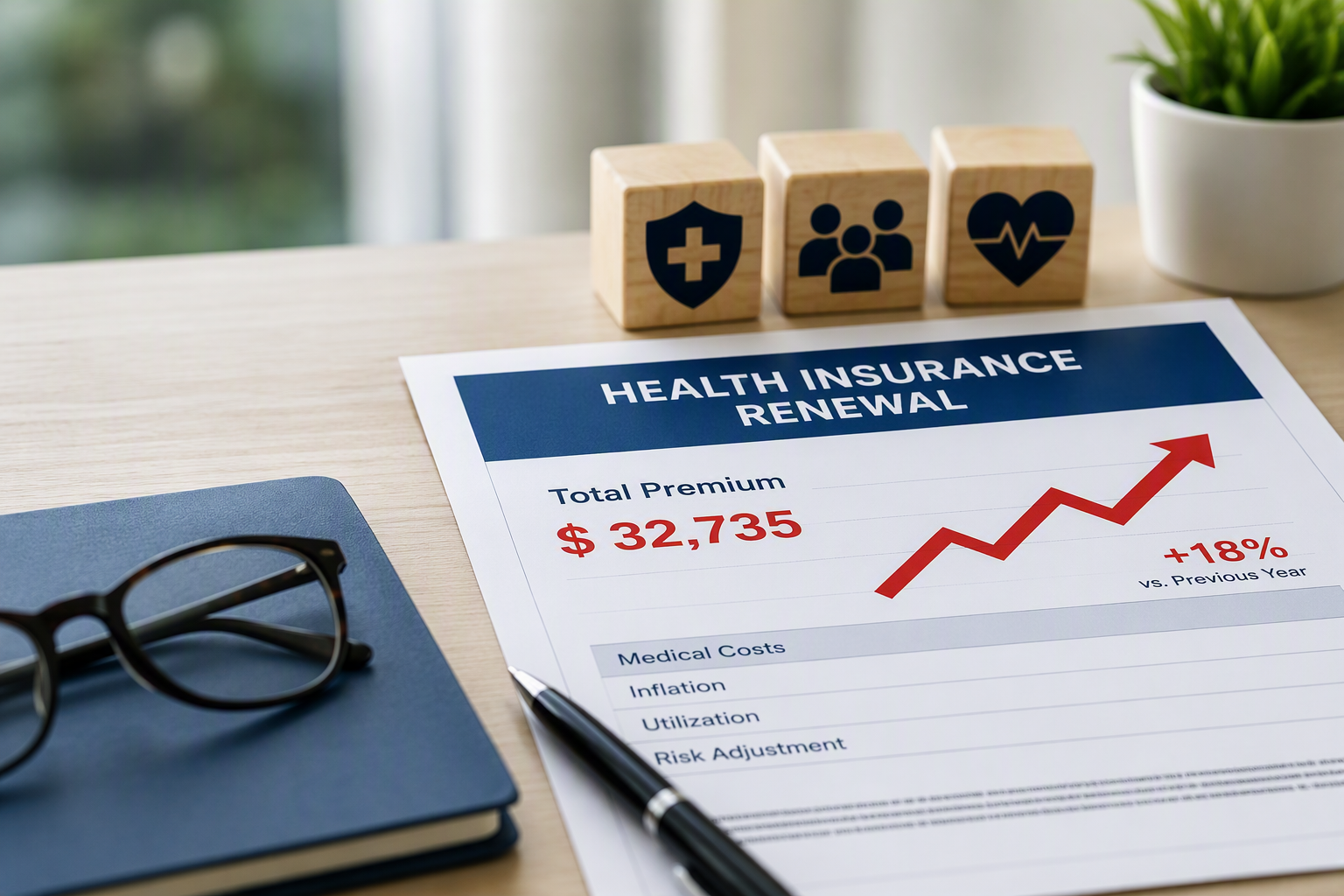
Your health insurance renewal arrives, and premiums have increased again. You review your employee census, and nothing has changed. No major claims. No significant turnover. No dramatic increase in utilization.
So why did your rates still go up?
It's one of the biggest frustrations employers face today, and the answer is more complex than most insurance carriers explain.
Your Company's Claims Aren't the Only Factor
Many business owners assume their renewal is based solely on their employees' health.
While your workforce certainly plays a role, healthcare premiums are influenced by several factors, including:
Overall medical inflation
Rising prescription drug costs
Hospital and provider reimbursement rates
Catastrophic claims across the insurance pool
Administrative expenses
Regulatory changes
Even if your employees had a relatively healthy year, broader market trends can still push your renewal higher.
According to the Centers for Medicare & Medicaid Services (CMS), national health expenditures continue to outpace general inflation over the long term, placing ongoing pressure on employer-sponsored health plans.
Small Employers Face the Greatest Challenge
The smaller your company, the less negotiating power you typically have.
A business with 20 or 30 employees has very little leverage when purchasing health insurance. You're often limited to a handful of carriers and plan designs.
In many cases, your broker shops the available market, but if every carrier is increasing rates, there are only so many options.
This is why many employers feel trapped.
They're not necessarily paying too much because of poor decisions.
They're simply buying insurance through a market with limited flexibility.
Looking Beyond Traditional Renewals
Many business owners believe they have only two choices:
Accept the renewal
Raise employee contributions
In reality, there are additional strategies worth evaluating.
One option is partnering with a Professional Employer Organization (PEO).
Rather than purchasing coverage as an individual employer, companies participating in a PEO become part of a much larger employee population.
This larger buying group often provides access to:
More plan options
Broader provider networks
Competitive pricing
Greater renewal stability
While no PEO can eliminate healthcare inflation, many employers discover that purchasing benefits through a larger pool creates opportunities they didn't have in the traditional small-group market.
Better Benefits Can Improve More Than Costs
Health insurance isn't just a line item on your budget.
It's also one of your most important recruiting and retention tools.
Employees increasingly compare benefit packages when deciding where to work.
Offering stronger medical coverage can help:
Attract higher-quality candidates
Improve employee satisfaction
Reduce turnover
Strengthen your overall compensation package
Sometimes the goal isn't simply reducing premiums.
It's getting more value for every dollar you already spend.
The Importance of Benchmarking
One mistake many employers make is renewing year after year without comparing alternatives.
Markets change.
Carriers change.
PEO offerings change.
What wasn't competitive two years ago may be one of the strongest options available today.
Benchmarking your current benefits against multiple strategies provides valuable insight into whether you're receiving the best value.
The Bottom Line
Healthcare costs are likely to remain one of the largest expenses for employers.
While no one can completely avoid rising medical costs, businesses do have choices in how they purchase coverage.
If you've accepted multiple consecutive premium increases without exploring alternatives, it may be time for a second opinion.
A comprehensive benefits comparison can help determine whether your current strategy remains the best fit or whether another approach, such as a PEO, could improve both costs and employee satisfaction.